
Products
Why Choose Us?
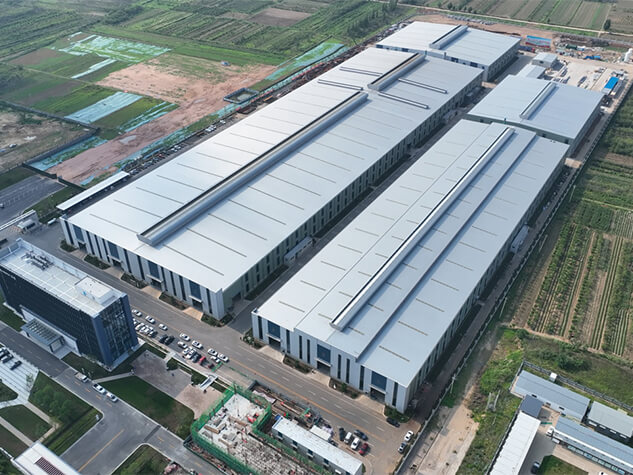
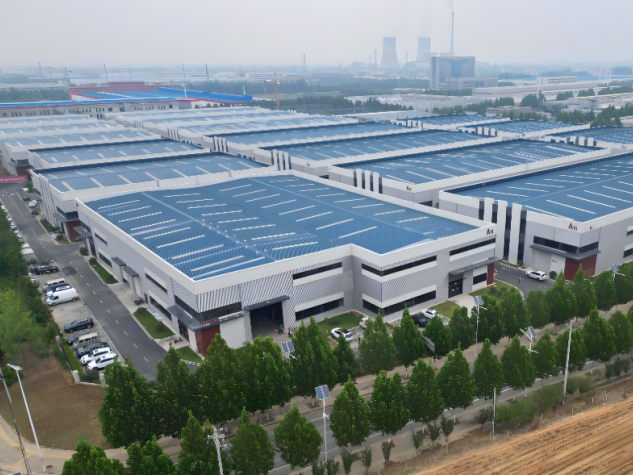
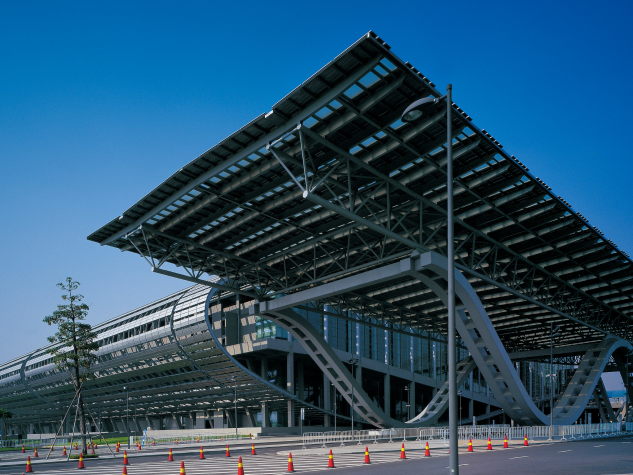
Tiankai Southeast is specializes in design manufacturing installation prefabricated housing multi- super
high-rise steel structures large-span space tube truss steel structures plant steel structures green building
materials and other prefabricated building production and manufacturing enterprises.
Precision forging, both rigidity and flexibility, quality and creativity.
Integrated with steel structure, creating modern practical landscape, durable.
Cutting-edge tech fused with stylish design, reshaping building appearance’s peak.
With steel as the core, scientific planning, releasing the unlimited potential of space.
Frequently Asked Questions
Find quick answers to common questions below.
What are the differences in the choice of anticorrosive primers for different types of steel structure buildings?
The corrosion environment, use requirements and maintenance conditions of different types of steel structure buildings vary greatly. The selection of anticorrosive primers revolves around “adapting to corrosion strength, ensuring adhesion, and matching subsequent coatings“. The following are the choices and differences of primers for various common steel structure buildings:
1. Steel structure of industrial plant
Most of these buildings face dust, oil pollution, minor chemical media or humid environments, with medium corrosion levels, and cost economy needs to be taken into account.
- If it is an ordinary enclosed plant, epoxy zinc phosphate primer is preferred. It has more flexible surface treatment requirements and can be adapted to St3-grade manual rust removal surfaces. It has good oil resistance and moderate cost, which can meet the initial anti-rust needs of dry or slightly humid environments;
- If it is a chemical plant, semi-open-air plant and other scenes with slightly heavier corrosion, epoxy zinc-rich primer (zinc content ≥70%) will be selected. It protects against slight chemical media erosion through cathodic protection. After matching epoxy cloud iron intermediate paint and polyurethane topcoat, it can extend the anticorrosive life and adapt to Sa2.5 grade rust removal surface.
2. Bridge steel structure
Bridges are exposed to the outdoors for a long time, and the corrosion environment of inland and marine bridges is very different, and the choice of primers is highly targeted.
- Inland bridges are mainly affected by moisture and acid rain, and there is no high salt content erosion. Ordinary epoxy primers are optional. They have strong wet adhesion and can cope with changeable atmospheric humidity. Supporting polysiloxane or polyurethane topcoats can meet the needs, taking into account performance and cost; Cross-sea and coastal bridges are in a high salt spray and tidal soaking environment.
- Chloride ion erosion is the main threat. High zinc-containing epoxy zinc-rich primers (zinc content is often ≥80%) must be selected. Its cathodic protection ability is strong and can effectively prevent the penetration of chloride ions. After matching epoxy cloud iron intermediate paint and fluorocarbon topcoat, the anticorrosive life can be improved. In more than 20 years, a similar system has been adopted for some sections of the Hong Kong-Zhuhai-Macao Bridge.
3. Steel structure of public venues and landmark buildings
Buildings such as stadiums and airport terminals are not only exposed to the outdoors, but also have high requirements for coating durability and aesthetics, and maintenance is difficult.Epoxy zinc-rich primer is preferred for such buildings. It has excellent adhesion (the adhesion of the grid method can reach level 0) and can be well compatible with subsequent epoxy cloud iron intermediate paint, fluorocarbon or aliphatic polyurethane topcoat.For venues that adopt environmental protection standards, water-based epoxy zinc-rich primers will be selected to ensure anticorrosive properties while reducing VOCs emissions. For example, the steel structures of some venues of the Beijing Winter Olympics use such environmentally friendly primers.
4. Residential steel structure
Residential steel structures are mostly low-rise or high-rise steel structure frames, and some are indoor concealed components.
- The corrosive environment is mainly humid in the ordinary atmosphere, and the environmental protection and construction convenience requirements are high.Epoxy iron red primer can be used for indoor concealed components, which has stable anti-rust performance and low cost, which can meet the long-term protection of dry indoor environments;
- Outdoor exposed components such as balconies and canopy steel structures are suitable for water-based epoxy primers. This type of primer has a low odor and is environmentally friendly during construction. It is suitable for St3 or Sa2 grade rust-removing surfaces. After matching with water-based polyurethane topcoat, it can not only resist outdoor ultraviolet rays and rainwater erosion, but also meet the requirements of residential green environmental protection.
5. Marine engineering steel structure
Steel structures such as ports, docks, and marine platforms have long been in an extremely corrosive environment of seawater immersion, high salt spray, and strong wind and wave erosion, which requires extremely high long-term corrosion resistance of primers.Inorganic zinc-rich primers are usually used. They are better than epoxy zinc-rich primers for high temperature resistance and seawater erosion resistance. They can form a dense coating on the surface of steel. With epoxy phenolic intermediate paint and fluorocarbon topcoat, they can resist seawater corrosion and marine biological adhesion. For some components that require short-term transition protection, it can also be used with epoxy zinc yellow primer to assist in rust prevention by using the passivation of zinc yellow.
6. Temporary steel structure building
Such as temporary exhibition halls, construction sheds, etc., with short service cycles and low anti-corrosion requirements, priority is given to construction convenience and low cost.Water-based acrylic primer is mostly used. It has a fast drying speed (surface dryness ≤1 hour) and can be constructed at low temperature. It is suitable for temporary projects with tight construction periods. Although the corrosion resistance is limited, it can meet the basic anti-rust needs in short-term use, and the environmental impact of subsequent renovation or demolition is small.
What are the differences in cost between different types of steel structures?
The cost differences of different steel structures are mainly due to the three core factors of “material usage, processing difficulty, and installation complexity”. The overall cost is consistent from low to high: gantry rigid frame <row frame structure <frame structure <truss structure <combination structure <grid frame / mesh shell structure.
The core reasons for the cost differences of various steel structures
1. Door-type rigid frame structure: lowest cost
- The form of the components is simple (mostly H-shaped steel), the processing process is small, and the material utilization rate is high.
- No complex node design, fast installation speed, low labor cost, suitable for small and medium-sized factories and warehouses.
2. Rack structure: lower cost
- The column is hinged with the roof frame, the force of the components is clear, and the material consumption is moderate.
- It is not difficult to process and install. It is mainly used in single-layer industrial plants (such as machinery plants and workshops), and the cost is slightly higher than that of door-type rigid frames.
3. Framework structure: medium cost
- The beam and column are just connected to the design, the overall stiffness needs to be guaranteed, the cross-section of the components is larger (such as box-shaped columns, thick flange H-shaped steel), and the amount of material is increased.
- The node processing is complex (welding or high-strength bolting is required), and the high-rise project needs to consider additional seismic design, and the cost is higher than that of the row frame and the door-type rigid frame.
4. Truss structure: medium and high cost
- Most of the rods are angle steel, channel steel or round steel. The amount of material is relatively economical, but the number of nodes is large.
- The assembly accuracy requirements are high, the processing and installation time is long, and the cost advantage in large-span projects (such as convention and exhibition centers, stadium stands) is obvious, but the overall is higher than the frame structure.
5. Combination structure: higher cost
- Materials such as concrete and steel pipes need to be combined, and the cost of material procurement and construction coordination increases.
- The processing technology is complex (such as formwork support and interface treatment of steel-concrete combined beams), which is suitable for high-rise or heavy-duty projects, and the cost is higher than that of pure steel structural frames.
6. Mesh frame / mesh shell structure: the highest cost
- The space nodes are dense, the rod specifications are diverse, and the machining accuracy requirements are extremely high (CNC cutting and welding are required).
- Installation is difficult (mostly requires high-altitude assembly or overall upgrading), labor and machinery rental costs are high, and it is only used for large-span and complex modeling projects (such as airport terminals and spherical venues).
Additional key factors affecting costs
- Material specifications: High-strength steel (such as Q355, Q460) is more expensive than ordinary steel (Q235), but it can reduce the cross-section of the components and balance the overall cost.
- Span and height: The larger the span and the higher the height, the stronger the structural stiffness is required, the amount of materials and the difficulty of installation soar, and the cost increases non-linearly.
- Anticorrosive and fireproof requirements: outdoor or high temperature environments require high standards of anticorrosive (such as fluorocarbon paint) and fireproof coatings, which directly increase construction costs.
- Localization factors: steel prices, labor costs, and transportation distances in the target market will significantly affect the final landing cost.
Common types of steel structures
The core of commonly used steel structures is divided according to “force form + structural characteristics”, and there are six main categories, covering most engineering scenarios.
Classification by structure
- Door-type rigid frame structure: with the door-shaped frame just connected to the node as the core, with purlin and support system.
- Frame structure: it is formed by beams and columns connected by rigid joints or hinged joints, and is divided into pure steel frames and steel-concrete mixed frames.
- Truss structure: it is composed of rods hinged by nodes, in the form of triangular unit splicing.
- Mesh frame / mesh shell structure: Spatial grid-like structure, the mesh frame is flat-shaped, and the mesh shell is curved (such as spherical and cylindrical).
- Row frame structure: it is composed of a column and a foundation just connected, and a column and a roof frame hinged, with strong transverse stiffness.
- Combined structure: steel structure combined with other materials, such as steel-concrete combined beam, combined column, and concrete filled steel tube structure.
Classification by component type
- Beam structure: withstand transverse loads, such as H-beam, I-beam, and box beam.
- Column structure: withstand axial pressure and bending moment, such as H-shaped steel column, box-shaped column, and steel pipe column.
- Support structure: transmits horizontal force and enhances overall stability, such as cross support, herringbone support, and oblique support.
- Plate structure: such as steel floor slabs and pressed steel plates, they are mostly used as enclosures or load-bearing auxiliary components.
Application scenarios of commonly used steel structures
The core application scenarios of commonly used steel structures are concentrated in four categories“ “Large-span, high-rise, industrial, and temporary /assembled”, which are adapted to different project needs.
Industrial building scene
- Factory buildings: such as heavy steel factories and light steel workshops, they are suitable for equipment load-bearing, large-span production space requirements, and have strong impact resistance.
- Warehouse and logistics center: large-span column-free design, easy to stack goods and mechanical operations, short construction cycle.
- Industrial structures: such as steel brackets, steel platforms, chimney supports, and equipment foundation frames, which are suitable for high temperature and heavy-duty working conditions.
Public and civil building scenes
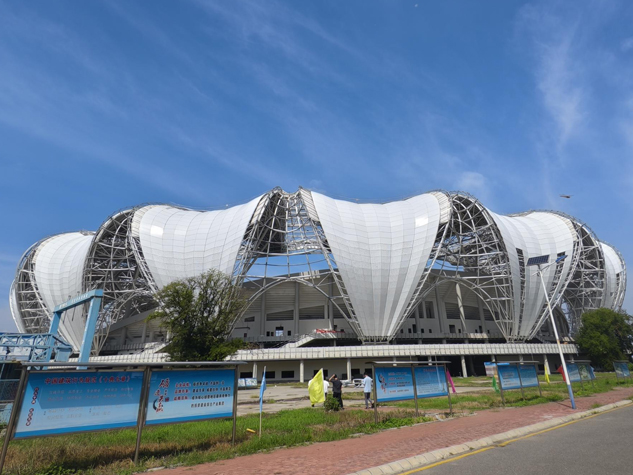
- Large-span public buildings: stadiums, convention and exhibition centers, airport terminals, and high-speed rail stations rely on the span advantages and spatial flexibility of steel structures.
- High-rise buildings: office buildings, apartment buildings, and hotels. The steel structure has light weight and good seismic resistance, which can improve the height and construction efficiency of the building.
- Commercial and cultural tourism buildings: shopping centers, theaters, museums, scenic venues, support complex modeling design, taking into account aesthetics and practicality.
Infrastructure and special scenarios
- Transportation infrastructure: bridges (cross-sea / cross-river bridges, viaducts), tunnel supports, toll station awnings, railway platforms.
- Energy-related facilities: wind power towers, photovoltaic brackets, substation structures, petrochemical pipe corridor brackets, weather resistance and load-bearing properties are up to standard.
- Temporary and emergency buildings: construction sheds, movable board houses, temporary buildings for post-disaster reconstruction, temporary venues for exhibitions, assembled installations, recyclable and reusable.
Agriculture and other scenarios
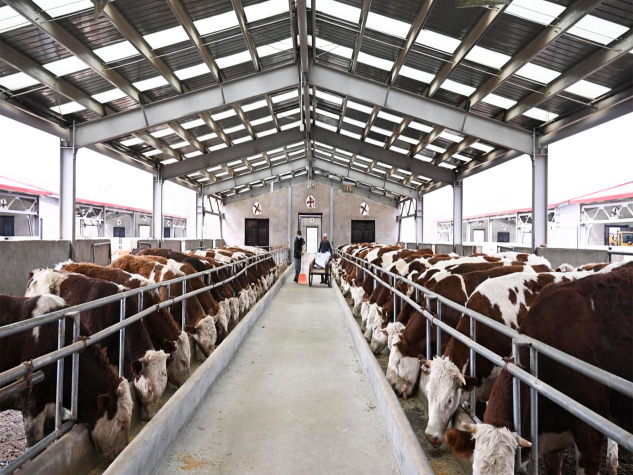
- Agricultural facilities: greenhouse skeleton, breeding plant, anti-corrosion treatment adapted to outdoor humid environment, span can be flexibly adjusted.
- Others: billboard brackets, stage trusses, port terminal loading and unloading platforms, cold storage steel structures (suitable for low temperature environments).
How many years is the service life of a steel structure plant?
The design service life of a steel structure plant is usually 50 years. The actual service life is affected by factors such as anti-corrosion maintenance, use environment, load conditions, etc., and can be extended to more than 60 years or shortened to less than 30 years.
Core influencing factors
- Anti-corrosion protection level: This is the key to determining the life span. Regular brushing of anti-corrosion coatings (such as epoxy zinc-rich primer + polyurethane topcoat) can effectively resist corrosion, and the service life can be close to or exceed the design life; if it is not maintained for a long time, severe corrosion may occur in outdoor or highly corrosive environments within 15-20 years.
- Use environment: Factories in dry inland areas have a slow corrosion rate and generally have a longer life span; in corrosive environments such as coastal high-salt spray and chemical areas, if anti-corrosion (such as high-zinc primers and fluorocarbon topcoats) is not strengthened, the life span may be shortened by 30%-50%.
- Load and usage: Long-term overload and frequent exposure to strong vibration (such as the continuous operation of heavy equipment) will accelerate structural fatigue and shorten life; reasonable use and no unauthorized changes to the main structure can maintain the design life.
- Fireproof treatment: If a fire occurs and the fireproof coating fails, the steel structure will quickly soften and deform, and even if it does not collapse, the subsequent service life may be greatly shortened due to structural damage.
Reference to the actual life span in different scenarios
- Dry dryness + routine maintenance: 50-60 years
- Coastal / slightly corrosive environment + regular maintenance: 35-50 years
- High chemical corrosion environment + enhanced anticorrosion + professional maintenance: 30-40 years
- Temporary plant / no maintenance + harsh environment: 10-20 years
Advantages of steel structure factory buildings
The core advantages of steel structure factories are concentrated in the four dimensions of “construction efficiency, space utilization, durability, and economy”, which are adapted to the diverse needs of industrial production.
Short construction cycle and rapid production
- Most of the components are prefabricated in factories and assembled on site, with a high degree of standardization, and the installation speed is 30%-50% faster than that of concrete factories.
- Not affected by the season, normal construction can be carried out in winter, reducing delays in the construction period, and helping enterprises to quickly put into operation.
High space utilization rate and flexible layout
- The steel structure has high strength and light weight, which can realize a long-span column-free design (the span can reach more than 30 meters), and the interior is unobstructed.
- The zoning of the plant can be flexibly adjusted in the later stage. If the capacity needs to be expanded or the production layout needs to be changed, the disassembly and transformation of the components are convenient, and there is no need to destroy the main structure on a large scale.
Safe and durable, suitable for industrial environment
- Excellent seismic resistance, strong toughness of steel structure, can withstand natural disasters such as earthquakes and typhoons, and ensure production safety.
- The anticorrosive and fireproof properties can be upgraded through professional coatings, which are suitable for industrial conditions such as high temperature, humidity, and dust, and have a service life of more than 50 years.
Outstanding economy and low comprehensive cost
- The weight is only 1/3-1/2 of the concrete structure, which can reduce the amount of materials and construction costs of basic projects.
- The steel can be recycled and reused. More than 80% of the steel can be recovered when the plant is demolished in the later stage, which is environmentally friendly and reduces the loss of residual value.
- Low maintenance costs, only regular inspection of anticorrosive coatings is required daily, and there is no need to repair cracks and waterproofing as frequently as concrete structures.
Strong carrying capacity, suitable for industrial needs
- Can easily carry heavy-duty production equipment, cranes and other loads, and frames of different load-bearing grades can be designed according to production needs.
- Strong deformation resistance, can maintain structural stability after long-term equipment vibration, and is not prone to cracking and settlement problems.
Industry standards for rust removal and anti-corrosion primers for steel structures
There are clear national general standards for rust removal of steel structures, and the standards for anticorrosive primers will be subdivided according to different application fields such as construction and transportation, covering primer types, performance requirements and adaptation scenarios. The following is a detailed combing:
Steel structure rust removal standard.
The core is based on the national standard GB/T 8923.1-2011 “Visual evaluation of the surface cleanliness of Steel surface treatment before Coating Part 1”, https://openstd.samr.gov.cn/bzgk/std/newGbInfo?hcno=6BC8D52A103AFEE95AC318BEB5DC4EC8 This standard is the core specification of rust removal operations, which is specifically divided as follows:
Corrosion level
The degree of corrosion on the surface of uncoated steel is divided into four levels A-D.The grade A oxide skin is almost completely covered without rust; the grade C oxide skin is peeled off in a large area and is obviously corroded; the grade D oxide skin is completely peeled off, and the surface of the steel is rough due to rust and even holes appear.
Rust removal level: classified by rust removal method and effect
| Rust removal method | Grade | Core requirements |
| Manual / power tool rust removal(St) | St2 | There is no visible grease or dirt on the surface, and no impurities such as oxide skin and rust that are firmly attached. |
| St3 | Rust removal is more thorough, and the surface shows a certain metallic luster | |
| Jet / ejection rust removal(Sa,Commonly used in industry) | Sa1 | Mild rust removal, most of the oxide skin and rust are removed, and the residue is firmly attached |
| Sa2 | Completely remove rust, oxide skin, iron rust, etc. are basically removed, and the residues are distributed in dots or stripes. | |
| Sa2.5 | Very thorough rust removal, allowing only a small amount of tightly attached residues, is a common standard for most anticorrosive projects | |
| Sa3 | The surface of the steel is clean, without any impurities, and has a uniform metallic luster. |
Steel structure anticorrosive primer standard
The standards for anticorrosive primers are divided into many fields. Different scenarios have different requirements for primer types and performance indicators. The common core standards are as follows:
1.Construction field
JG/T 224-2007 “Anticorrosive Coatings for Steel Structures for Construction”: The primer is included in the protective coating system, and it is required to be compatible with intermediate paints and topcoats.It is stipulated that the outdoor primer must pass the 600-hour artificial aging test, and the light retention rate is ≥80%; it is resistant to the 200-hour neutral salt spray test without foaming or shedding, and the adhesion of the grid method is ≤Level1.
JGJ/T 251-2011 “Technical Regulations for Anticorrosion of Building Steel Structures”: It is clear that the epoxy iron red primer is suitable for Sa2, Sa2.5 or St3 grade rust removal surfaces, and the zinc-rich primer needs to be matched with Sa2.5 grade rust removal surfaces to meet the anticorrosive needs of different building scenes.
2.Transportation field
JT/T 722-2008 “Technical Conditions for Anticorrosive Coating of Steel Structures for Highway Bridges”: It is recommended that epoxy zinc-rich primers be used in C3-C5 corrosive environments (such as coastal and industrial zone bridges), and epoxy zinc phosphate primers are suitable for C3-C4 medium corrosive environments; at the same time, the primer is required to match the anticorrosive system for bridges to ensure long-term protection.
JT/T 1336-2020 “Technical Specifications for the Maintenance and Maintenance of anticorrosive Coatings on the Surface of Steel Structures of Port Machinery”: For port cranes and other equipment, requirements are made for the repair and matching of primers, which are suitable for the corrosive environment of high humidity and high salt spray in ports. Epoxy zinc-rich primers are often used.
3.Industrial general field
GB/T 50046-2018 “Anti-corrosion Design Standard for Industrial Buildings”: In heavy-duty and multi-corrosive media scenarios such as industrial plants, epoxy zinc-rich primers and epoxy iron red primers are recommended.Among them, the epoxy zinc-rich primer needs to be matched with Sa2.5 grade rust removal surface, which is suitable for environments with more severe corrosion such as chemical industry and machining.
CONTACT INFO
Phone:
+86 15638166920Email:
[email protected]Address:
Xingyang City, Zhengzhou City, Henan Province, China.Connect With Tiankai Southeast
We’re here to assist you! Please reach out with any questions, feedback, or project inquiries.