From the China Pavilion at the Beijing International Horticultural Exhibition, which draws on China’s traditional construction wisdom, to the renovation of the West 10 Winter Olympic Plaza in the Shougang Old Industrial Zone that revives industrial heritage, and to Vanke Peak Garden with its vertical greening design—these projects, diverse in form and function, share a common identity: green buildings.
A green building is a high-quality building that conserves resources, protects the environment, and reduces pollution throughout its entire life cycle. It provides people with healthy, comfortable, and efficient living and working spaces, and maximizes the harmonious coexistence between humans and nature. Against the backdrop of achieving the goals of carbon peaking and carbon neutrality, promoting the development of green buildings and advancing carbon emission reduction in the construction sector is undoubtedly of great significance.
What is the current state of green building promotion? What room for improvement remains?
From solar-powered sunrooms and prefabricated “building-block” houses to highly insulated passive buildings, the ways to make buildings “green” are rich and varied.
In the Future Science City in Changping District, Beijing, there stands a house clad in a blue photovoltaic “coat”. Replacing traditional cement walls with lightweight photovoltaic walls, 1,155 thin-film photovoltaic modules glisten in the sun, with an estimated annual power generation capacity of 75,000 kWh—meeting 30% to 40% of the building’s electricity demand.
“The outer layer is a photovoltaic curtain wall, and the inner layer is insulated transparent glass, forming a closed cavity in between for heat extraction. In summer, the temperature of the photovoltaic backsheet rises, reducing power generation efficiency; at this point, the blinds automatically open to lower the indoor temperature. In winter, the blinds close, turning the cavity into a ‘warm wall’ that reduces indoor heat load.”
Greenness extends beyond architectural design to the construction process itself. A total of 410 steel structural components, 197 roof unit panels, and 170 photovoltaic curtain wall units were prefabricated in factories and then assembled like building blocks—taking just seven days in total. Prefabricated construction not only speeds up the process but also effectively cuts air pollution and construction waste during construction, as well as reducing environmental nuisances such as dust and noise.
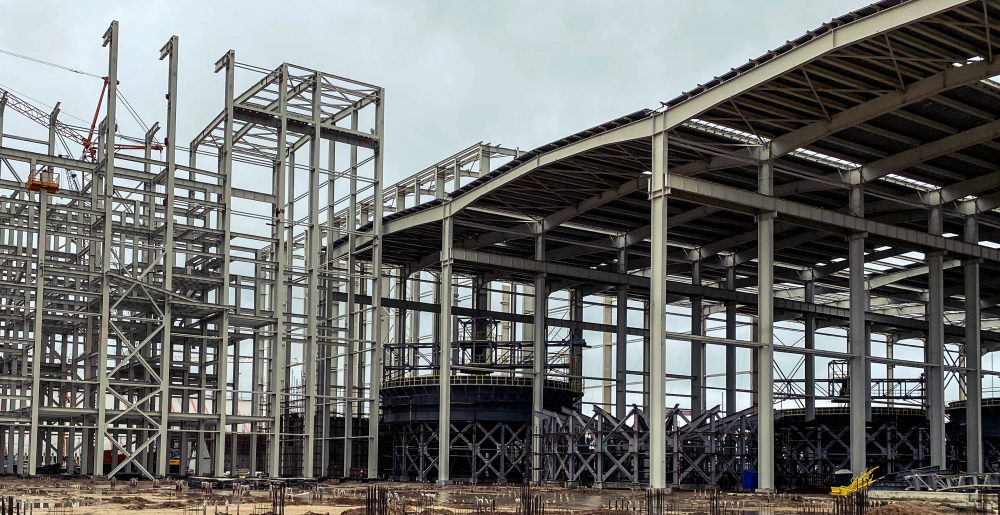
Passive ultra-low-energy buildings represent another form of green building.
At the East Zone Project of Beijing Shichuang Medical Valley Industrial Park, Building 15 is the largest under-construction passive ultra-low-energy building in Beijing. The project’s biggest feature is being “thickly insulated and tightly sealed”. By adopting a range of advanced technologies, it saves more than 80% of energy compared to traditional buildings. “For example, the thickness of external wall insulation materials in ordinary buildings is about 8 to 10 centimeters, but ours reaches over 20 centimeters. Additionally, the external windows use hollow ‘three-glass two-cavity’ glass filled with inert gas, which effectively blocks heat exchange between the interior and the external environment.”
With such tight sealing, how is indoor comfort? Through high-efficiency fresh air technology, the system improves air quality while maintaining a constant indoor temperature of 18 to 24 degrees Celsius—the most comfortable range for the human body—truly achieving warm winters and cool summers.
Green buildings are not about piling up equipment and technology; they should be tailored to local conditions and adapted to the site. Green buildings hold great development potential and require coordinated progress across the entire industrial chain and throughout the entire life cycle.