Case Overview
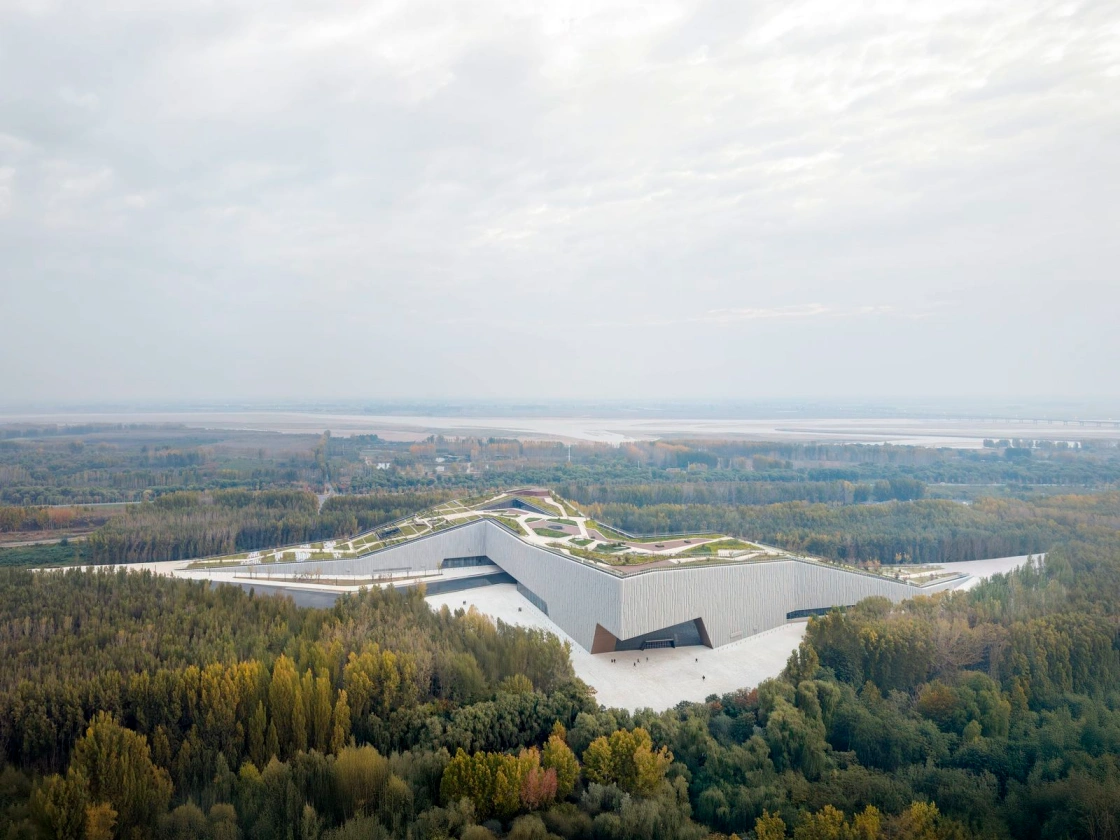
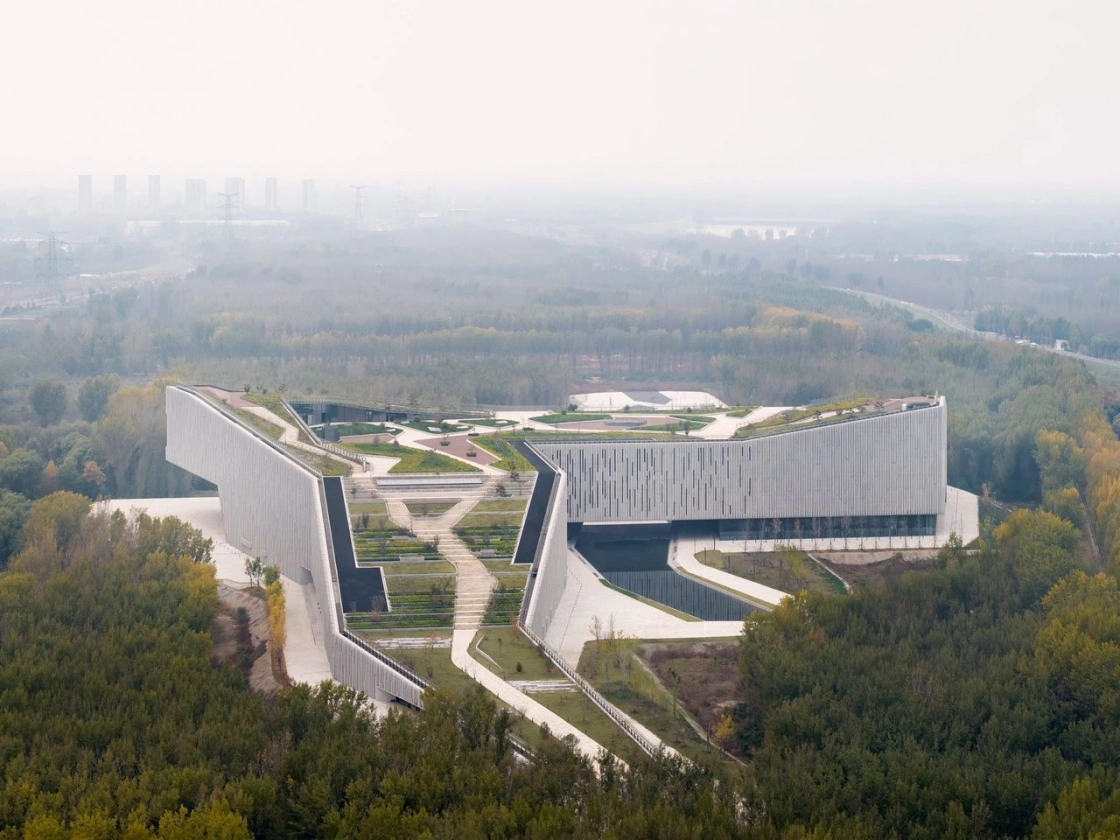
The Yellow River is the cradle that nurtured the Chinese civilization. In addition to promoting the historical inheritance role of the Yellow River in the development of Chinese culture, the Yellow River National Museum also focuses on the ecological evolution of the over 5,000-kilometer Yellow River Basin. The new museum building takes the winding waterfront landscape as its prototype, and proceeds from two aspects: urban design and space construction, to create a bridge symbolizing the intersection of the natural environment and modern civilization. The main building emerges from the embankment mountains, with its streamlined appearance seamlessly integrated into the natural landscape. The undulating, irregular polygonal building mass stretches across the meandering streams in the park. The green roof design extends the natural scenery of the national park to the roof terrace, where visitors can enjoy an extraordinary viewing experience—overlooking the magnificent and surging Yellow River to the north, and the beautiful skyline of Zhengzhou to the south. The natural stone retaining walls of the building’s vertical structure adopt a modular design composed of prefabricated curtain wall components, and their relief-like, rhythmic textures abstractly imitate the river’s course. Inside the building, the winding walls create a visual effect of water erosion, and the brass metal ceiling runs through the main visiting routes
On June 23, 2025, the Yellow River National Museum and its themed park in Zhengzhou were completed. The project not only showcases the cultural significance of the Yellow River, but also focuses on the ecological evolution of the over 5,000-kilometer Yellow River Basin. The new museum building and the Yellow River Culture Park are constructed along the winding river course, forming a bridge between nature and civilization both structurally and thematically, and integrating the architecture with the landscape.
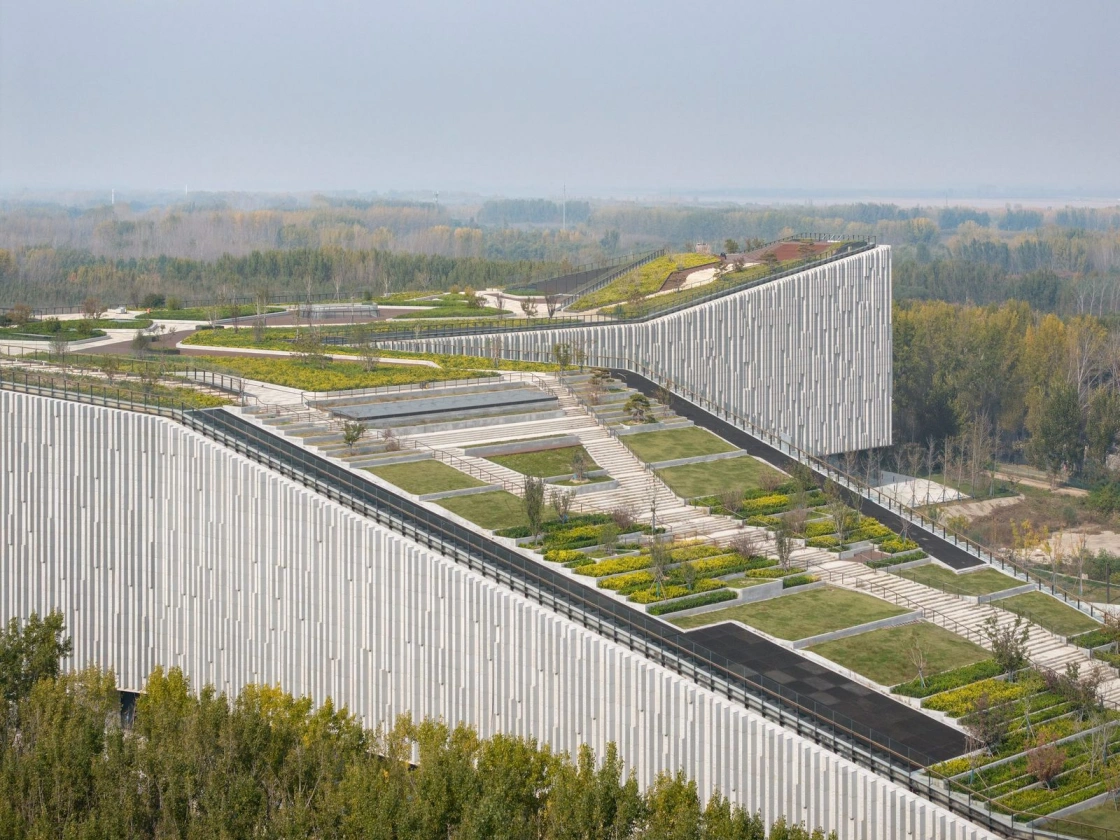
The new museum serves as the core of the Yellow River National Cultural Park and an important medium for integrating the surrounding green spaces into a continuous landscape. The main building rises from the embankment mountains, with its streamlined form blending perfectly into the natural scenery. The green roof extends the natural beauty of the national park to the 40-meter-high roof terrace, offering visitors a spectacular viewing experience—gazing at the majestic Yellow River to the north and the stunning skyline of Zhengzhou to the south. Along the winding paths on the roof, visitors can experience distinctive river-view attractions including picnic areas, an open-air theater, and exhibition zones.
The undulating, irregular polygonal building mass spans the meandering streams in the park. At the intersection of the building and the water flow, an organically extended atrium is designed as the core daylighting space of the museum, with a cleverly installed water curtain device at the opening.
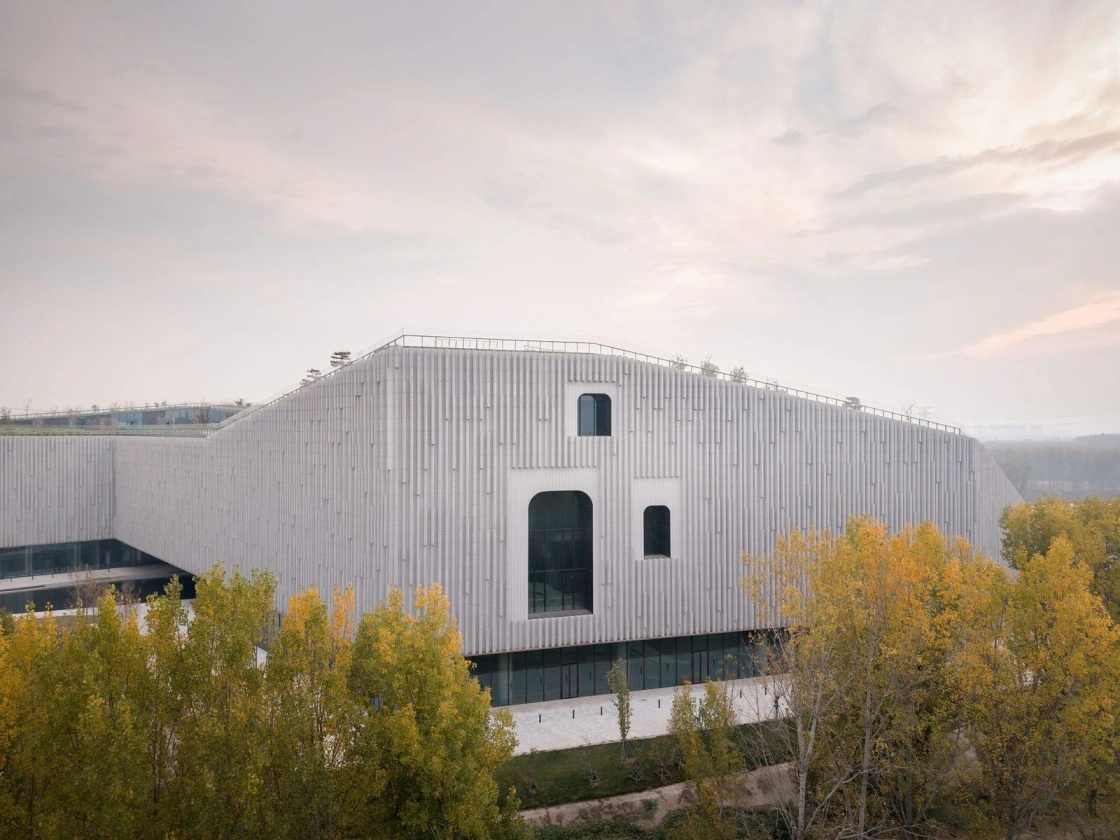
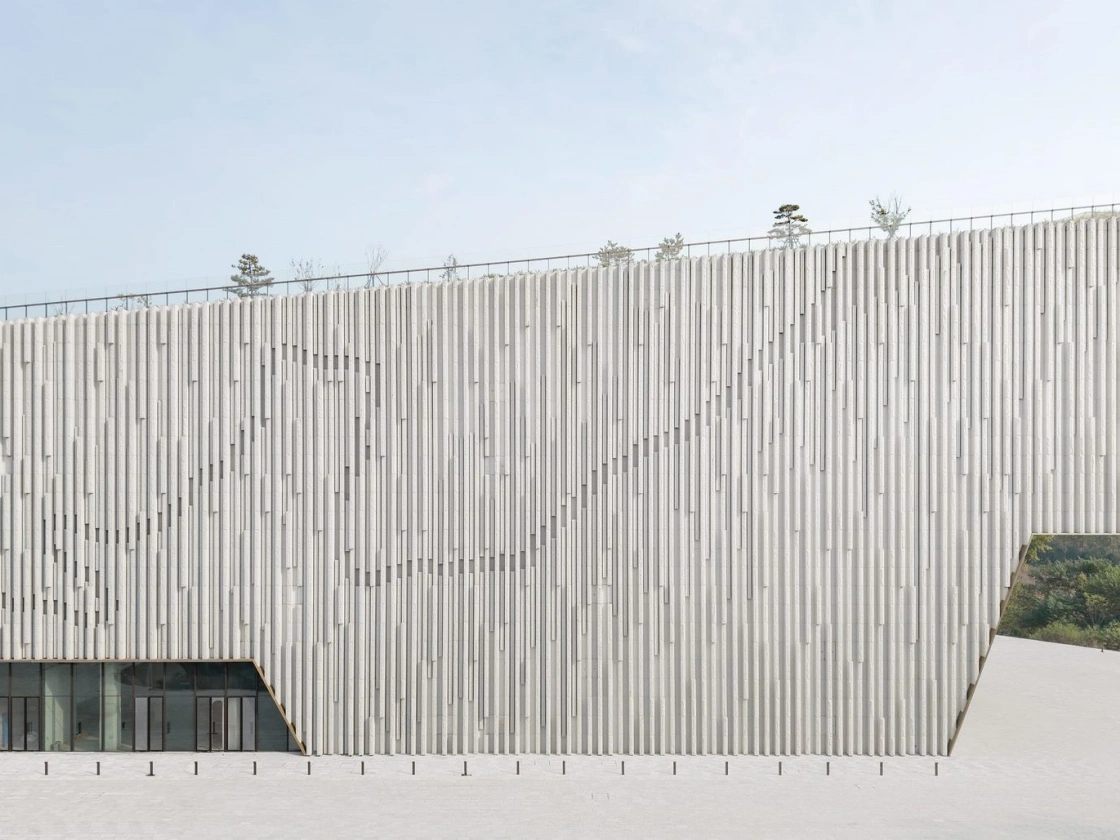
The natural stone retaining walls of the building’s vertical structure adopt a modular design made of prefabricated curtain wall components, and their relief-like, rhythmic textures create a visual impression of water scouring. Glass light wells are installed in the public areas, while the main exhibition areas are treated with light protection. The three large-scale windows on the north side are designed to mimic the Yellow River caves, offering a panoramic view of the landscape.
The museum’s glass main entrance is located beneath the cantilevered structure on the south side of the building, as if cut out from the building itself. Shining brass is used for the exterior facade and ceiling panels, further enhancing the ceremonial sense of the main entrance. The interior space continues the external design language and material concept—the winding walls create a visual effect of water erosion, and the brass ceiling running through the main visiting routes guides visitors to gradually immerse themselves in the exhibition space.